Grow Review · Humboldt Seed Company
Hella Jelly
A three-way cross of Jelly Rancher Bx3, Notorious T.H.C., and Very Cherry that flowers in 45 days or less. Sativa-dominant effects in an indica-shaped plant, selected from a 2019 Phenotype Mega-Hunt.
- Type
- Sativa-dominant hybrid · 60/40
- Flowering
- 45 days
- Yield
- High
- Difficulty
- Beginner friendly
- Genetics
- Jelly Rancher Bx3 × Notorious T.H.C. × Very Cherry
- Seed type
- Feminized photoperiod
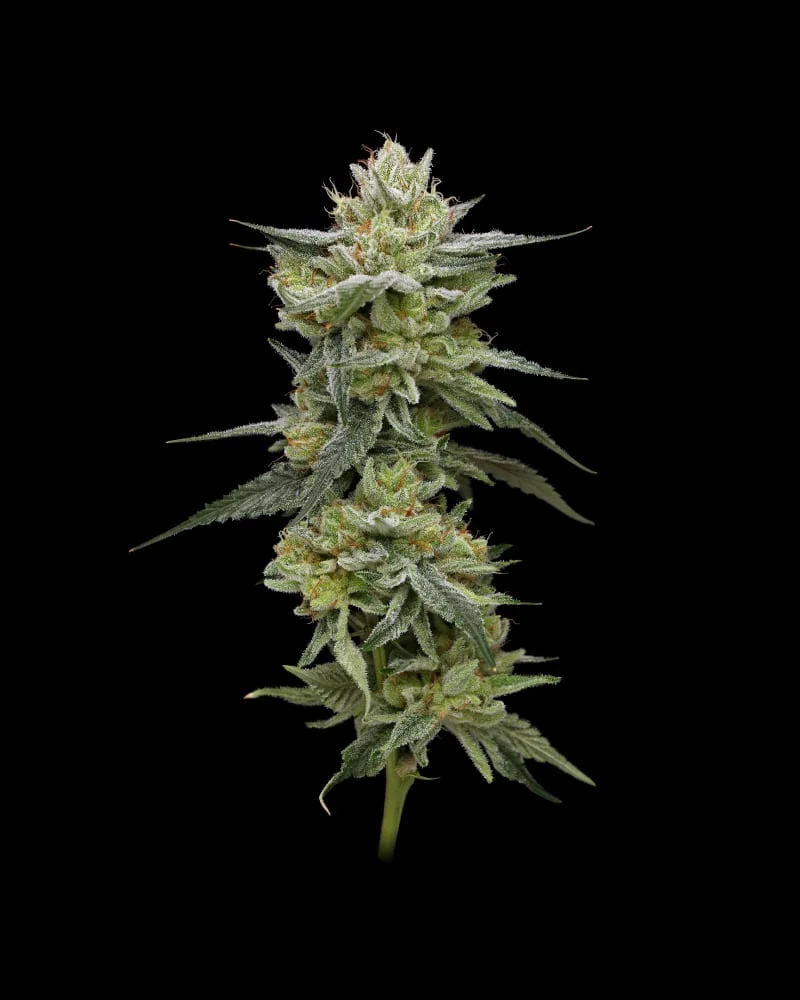
Hella Jelly (formerly Jelly Rancher) is a sativa-dominant hybrid from Humboldt Seed Company that Humboldt describes as “a sativa strain with the growth habits of an indica.” It flowers in 45 days or less according to the breeder, delivers happy, uplifting, creative effects according to 121 community reviewers on Leafly, and holds a caryophyllene-dominant terpene profile with one of the higher relative scores (0.93) in the Humboldt catalog. The strain was selected from a 2019 Phenotype Mega-Hunt, meaning Humboldt screened a large population before settling on this release.
Genetics
The genetics are a three-way cross: Jelly Rancher Bx3 x Notorious T.H.C. x Very Cherry (NASC product listing). Three-parent crosses are less common than standard two-parent hybrids and imply at least one intermediate crossing step in the breeding program, similar to Humboldt’s Dream Queen (Green Crack x Mazar Star x Skunk #1).
Jelly Rancher Bx3 is a third-generation backcross, meaning Humboldt selected a specific Jelly Rancher phenotype and bred it back to itself three times to stabilize the traits they wanted: the candy-fruit terpene profile and the compact growth habit. Notorious T.H.C. contributes potency and resin production, while Very Cherry adds the cherry and berry fruit notes that show up in the community flavor data.
The “Bx3” designation in the lead parent is important for growers. Three generations of backcrossing means the Jelly Rancher traits are heavily locked in, which is why NASC describes the phenotype expression as “highly uniform.” When combined with the additional two parents, the result is a plant that grows predictably while carrying a more complex terpene and effect profile than a simple backcross would.
Hella Jelly has itself become a parent strain. Leafly lists Jelly Donutz and Orange Creampop as direct descendants, both in the Humboldt catalog.
Flowering time and grow notes
Humboldt lists flowering at 45 days or less indoors, with outdoor harvest in early September or sooner (NASC product listing). That makes it one of the earliest-finishing photoperiods in the catalog, alongside Apple Blossom and Dream Queen.
However, community data introduces some nuance. A grower on r/GrowWeedFrance (u/Recent-Confusion-427) documented chopping at day 70, significantly past the breeder’s claim. This could reflect phenotype variation, growing conditions, or different harvest-timing preferences (some growers wait for higher amber trichome ratios, which adds days). The safe planning range is 7 to 10 weeks from the 12/12 flip rather than the optimistic 45-day figure.
The defining structural trait is what Humboldt calls “a sativa strain with the growth habits of an indica.” In practice, this means the plant stays compact and manageable rather than stretching tall like most sativa-dominant genetics. For growers in short tents or limited spaces, this is a significant advantage: sativa effects without sativa height management.
NASC categorizes Hella Jelly in Cannabis Seeds for Beginners, Cannabis Seeds with Low PVI (phenotype variation index), and Early Finishing Cannabis Seeds. The low PVI rating means seeds in a pack should produce similar plants, reducing the guesswork for new growers. NASC also describes it as “a great performer in all growing environments,” which suggests versatility across soil, coco, and hydro setups.
Terpene profile and aroma
Hella Jelly’s terpene profile is led by caryophyllene at a relative score of 0.93 across 121 Leafly reviews (listed under the original Jelly Rancher name). That is an unusually high caryophyllene reading. For comparison, Blueberry Muffin (529 reviews) leads with caryophyllene but at a lower relative intensity.
Myrcene (0.45) and humulene (0.30) sit in strong supporting positions, followed by limonene (0.23) and linalool (0.10). The combination produces a warm, peppery foundation (caryophyllene) with earthy depth (myrcene, humulene) and a citrus-fruit brightness (limonene) on top.
The flavor data from 121 reviewers confirms the fruit-forward nose that the genetics predict. Berry is the top-voted flavor (40 votes), followed by citrus (23), sweet (20), strawberry (11), and grape (9). NASC’s description (“blue cotton candy, strawberries, grapes”) aligns with the community data precisely. The underlying peppery warmth from the dominant caryophyllene is what separates Hella Jelly from other fruit-forward Humboldt strains. It is not purely sweet; there is a spice note that grounds the candy profile.
Effects
Community effect data across 121 Leafly reviews places happy (72 votes) and relaxed (66) at the top, followed by euphoric (48), focused (39), uplifted (36), creative (31), and talkative (27). The profile reads as a social, uplifting hybrid rather than a couch-lock indica. The focused and creative notes are consistent with Humboldt’s sativa-dominant classification.
Humboldt describes the effects as “strong but not debilitating” (NASC listing). Community data backs this: the happy-relaxed-euphoric top three suggests a high that lifts mood and eases tension without producing the heavy sedation that indica-dominant strains deliver. A home grower who pressed Hella Jelly into rosin (u/KylesGrowShow on r/flowerrosin) described the effect as “stoney euphoria that punches you in the temples off the rip, quiets anxiety and lifts mood while leaving you functional enough to get things done or remain social.”
Leafly’s community median THC is 20%, derived from the Jelly Rancher listing. The most reported side effects are dry mouth (16 votes) and dry eyes (7), which is standard. Medical users most commonly reach for it for stress (28 votes), depression (27), and pain (18).
What other growers say
Home grown Hella Jelly by Humboldt Seed Company pressed on a 6 ton Dab Press. 180 degrees for 3 minutes per press. 20gs of flower split into 4 x 5g pucks yielded 2gs of delicious buttery rosin. – u/KylesGrowShow, r/flowerrosin
The rosin yield (10% return from flower) is respectable for a home press, and the “buttery” descriptor aligns with the caryophyllene-dominant profile producing a warm, rich concentrate. NASC lists the strain as suitable for extraction purposes, and the community data supports that claim.
A separate grower on r/GrowersHelping420 documented mainlining Hella Jelly alongside Future #1 and Blueberry Cupcake in 105-degree desert heat, reporting that the plants “spent about three weeks outside and were still going strong.” Heat tolerance is not a commonly tested trait, but the observation is worth noting for outdoor growers in hot climates.
What to grow instead
- Apple Blossom, if you want a 50/50 hybrid at the same 45-day speed with less sativa-leaning effects. Apple Blossom is Blueberry Muffin x Dream Queen and sits closer to the center of the indica-sativa spectrum.
- Dream Queen, if you want an explicitly sativa-dominant daytime plant at 45 days, but are prepared for significant stretch. Dream Queen doubles in size during flower where Hella Jelly stays compact.
- Blueberry Muffin, if you want the strongest community data and most uniform phenotype expression in the Humboldt catalog. Different terpene profile (blueberry-butter-vanilla vs. berry-citrus-pepper) but the same breeder quality and F9 stability.
Where to buy Hella Jelly seeds
Hella Jelly is available from North Atlantic Seed Company’s Humboldt Seed Company collection in 3-packs ($45), 5-packs ($75), and 10-packs ($120) of feminized photoperiod seeds.
Affiliate disclosure: we may earn a small commission if you purchase through this link, at no extra cost to you.
How we researched this review
This review synthesizes three source types:
- Breeder and retailer specs from Humboldt Seed Company and North Atlantic Seed Company for genetics (Jelly Rancher Bx3 x Notorious T.H.C. x Very Cherry), flowering window, pack sizes, phenotype hunt origin, NASC category placements, and effect descriptions.
- Aggregate consumer data from Leafly’s Jelly Rancher page (the original name), drawing on 121 community reviews for terpene profile rankings (caryophyllene-dominant at 0.93), effect vote counts, flavor data, cannabinoid medians (20% THC), and medical condition reports.
- Community grower reports from Reddit, including a day-70 harvest report by u/Recent-Confusion-427 on r/GrowWeedFrance, a flower rosin press report by u/KylesGrowShow on r/flowerrosin documenting a 10% rosin return and “buttery” flavor, and a grow report on r/GrowersHelping420 noting heat tolerance in 105-degree conditions.